How to Grow Garlic at Home
Growing garlic at home is surprisingly easy, even if you have never gardened before. You can grow it in a backyard garden, a raised bed, or a large container on a patio.
The best time to plant garlic in Pennsylvania is usually in the fall, about 4–6 weeks before the ground freezes. This gives the cloves time to establish roots before winter and produce bulbs the following summer.
CHOOSE THE RIGHT GARLIC…
There are two main types of garlic:
Hardneck garlic: Excellent for cold Pennsylvania winters, with a bold flavor and edible flower stalks called scapes.
Softneck garlic: Often stores longer and is good for braiding.
For your first garden, I recommend a cold-hardy hardneck variety. Buy planting garlic rather than relying on grocery-store garlic, which may not grow well in your area.
PREPARE YOUR SOIL…
Pick a location that receives plenty of sunlight.
Loosen the soil about 8 inches deep.
Mix in compost to improve soil structure and fertility.
Make sure excess water can drain away.
If you're using a pot, choose one at least 8–10 inches deep, with drainage holes and enough room to space the cloves.
SEPERATE THE GARLIC CLOVES
Gently break apart the garlic bulb into individual cloves.
Keep the thin, papery skin on each clove.
Choose the largest, healthiest cloves for planting.
Leave the small, damaged, or soft cloves out of your planting batch.
Separate the cloves shortly before planting so they don't dry out. Each planted clove can grow into a new garlic bulb.
PLANT THE CLOVES
Make a small hole for each clove.
Place the clove with the pointed end facing up and the flat root end facing down (1-2” deep and 6-7” appart)
Cover with soil.
Gently pat the soil down.
Water the bed after planting.
Don't peel the cloves before planting.
PROTECT YOUR GARLIC THROUGH WINTER
Spread approximately 3–4 inches of loose straw or shredded-leaf mulch over the bed.
Mulch helps protect the cloves from temperature swings, reduces weeds, and retains moisture. Garlic is naturally cold-hardy and can survive winter outdoors when properly planted.
CARE FOR YOUR GARLIC IN THE SPRING
Once temperatures warm up, your garlic will begin growing green leaves.
Water: Keep the soil evenly moist, especially during dry periods. Avoid waterlogging.
Weed: Remove weeds regularly because garlic doesn't compete well with them.
Fertilize: Apply a suitable nitrogen fertilizer in early spring according to the product label and your soil needs.
Watch for scapes: Hardneck garlic produces curled flower stalks in late spring or early summer. Cut them while tender if you want to encourage larger bulbs. The scapes are edible, too.
HARVEST YOUR GARLIC
Garlic usually takes about 8–9 months from fall planting to harvest.
In Pennsylvania, harvest is commonly in early to mid-July, although the variety and weather can shift the timing.
Look for these signs:
The lower leaves have turned brown.
Several upper leaves remain partly green.
The bulbs have developed distinct cloves and intact outer wrappers.
Carefully loosen the soil with a garden fork or spade and lift the bulbs without bruising them.
DRY AND STORE YOUR GARLIC
Brush off loose soil without washing the bulbs.
Place them in a dry, shaded, well-ventilated location.
Allow them to cure for approximately 2–3 weeks, until the outer skins are papery and the roots are dry.
Trim the roots and stems if desired.
Store in a cool, dry, dark place with good airflow.
Save some of your largest, healthiest bulbs for planting the following fall.
Garlic Honey: A Tradition of Natural Wellness
Garlic and honey have long histories in traditional medicine, with their use dating back thousands of years. Ancient civilizations valued garlic for its pungent properties and used honey in soothing preparations and traditional remedies.
Over time, these two familiar ingredients became part of folk-remedy traditions in which garlic, valued for its pungent medicinal properties, and honey, prized for its sweetness and ability to soothe the throat and preserve foods, were infused together for household use, particularly during cold and flu season.
Although the exact origin of garlic-infused honey remains unknown, its enduring popularity reflects humanity's longstanding interest in using everyday foods as part of traditional wellness practices.
Garlic has been used in various cultures as a food and folk remedy. Traditional uses included:
Supporting general health and vitality.
Addressing digestive complaints.
Using it in folk preparations for coughs and colds.
Supporting wound care in some historical medical traditions.
Its sulfur-containing compounds, including allicin, are now studied for their antimicrobial and other biological effects.
Honey has a long history in traditional medicine, including uses such as:
Soothing irritated throats and coughs.
Applying to wounds in some medical traditions.
Preserving foods and other natural ingredients.
Serving as a base for herbal preparations.
Modern medicine also recognizes specific medical-grade honey products for certain wound-care applications.
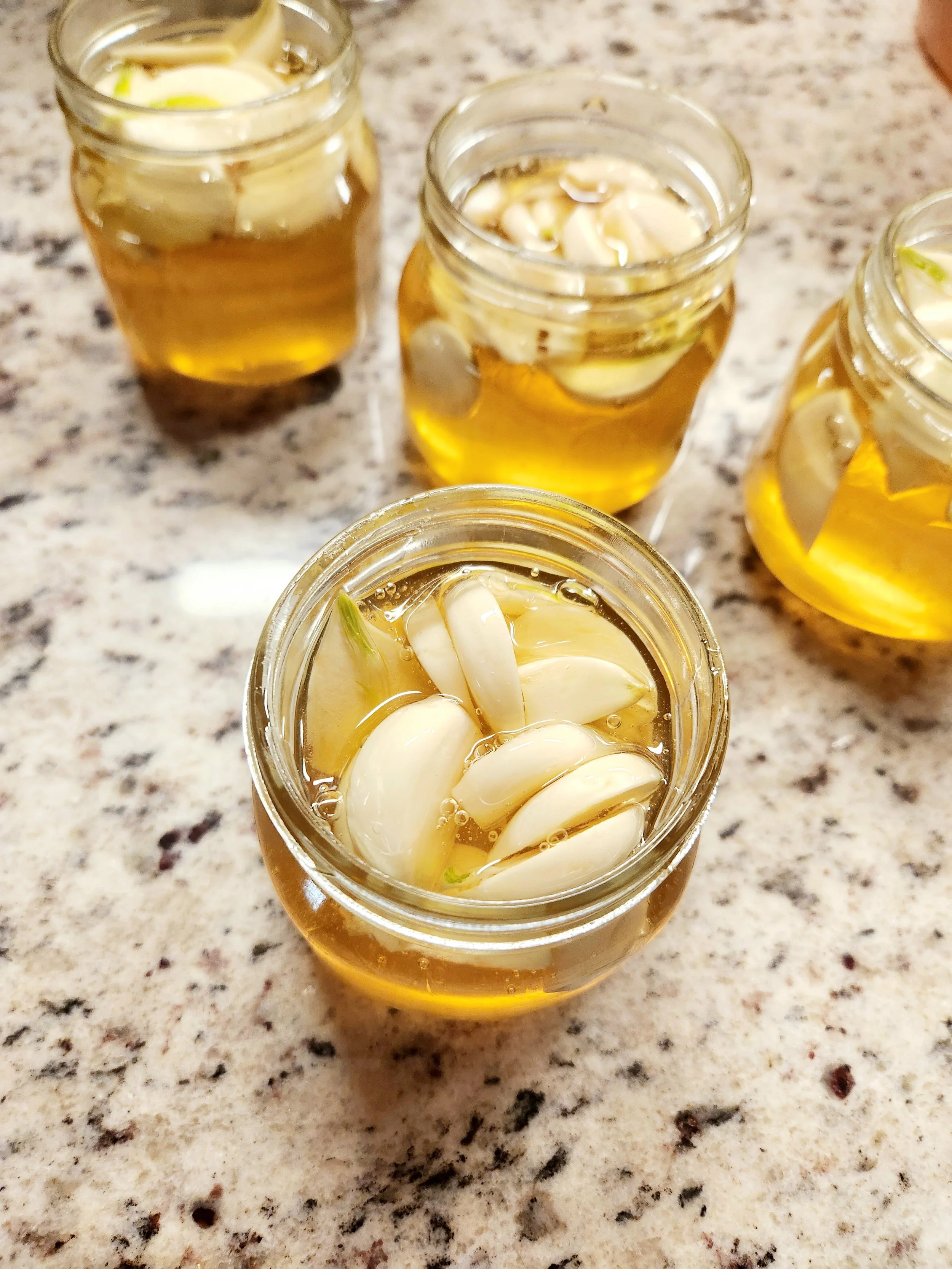
Garlic honey — combining two traditional ingredients
In folk-remedy practice, garlic infused in honey is used as a homemade preparation intended to:
Soothe the throat during seasonal illnesses.
Provide a convenient way to consume garlic.
Combine garlic's pungent compounds with honey's sweetness.
Serve as a traditional kitchen remedy during cold and flu season.
A few safety points are worth knowing:
Never give honey to a child under 12 months because of the risk of infant botulism.
Garlic may cause digestive upset and can interact with blood-thinning medications.